Vishing
Vishing is a phone-based scam tactic where callers impersonate trusted organizations or individuals to pressure people into sharing information or sending money. Because vishing happens live, scammers can adapt their approach, respond to hesitation, and escalate urgency during the call.
What Is Vishing?
Vishing, short for “voice phishing,” is a scam tactic where phone calls are used to impersonate a trusted organization or person in order to pressure someone into sharing information or sending money. Rather than being a single scam, vishing is a delivery method scammers use to carry out many types of fraud in real time.
Vishing relies on live phone conversations, not links or written messages. By speaking directly to someone, scammers can:
- Sound authoritative or reassuring
- Create urgency through tone and pacing
- Respond immediately to questions or hesitation
Some vishing calls now use AI-generated voices or scripts, making them sound more natural or familiar.
Many vishing attempts also involve caller ID spoofing or bypass carrier warning labels such as “Scam Likely,” increasing the chance the call is answered in the first place.
How Vishing Is Used in Scams
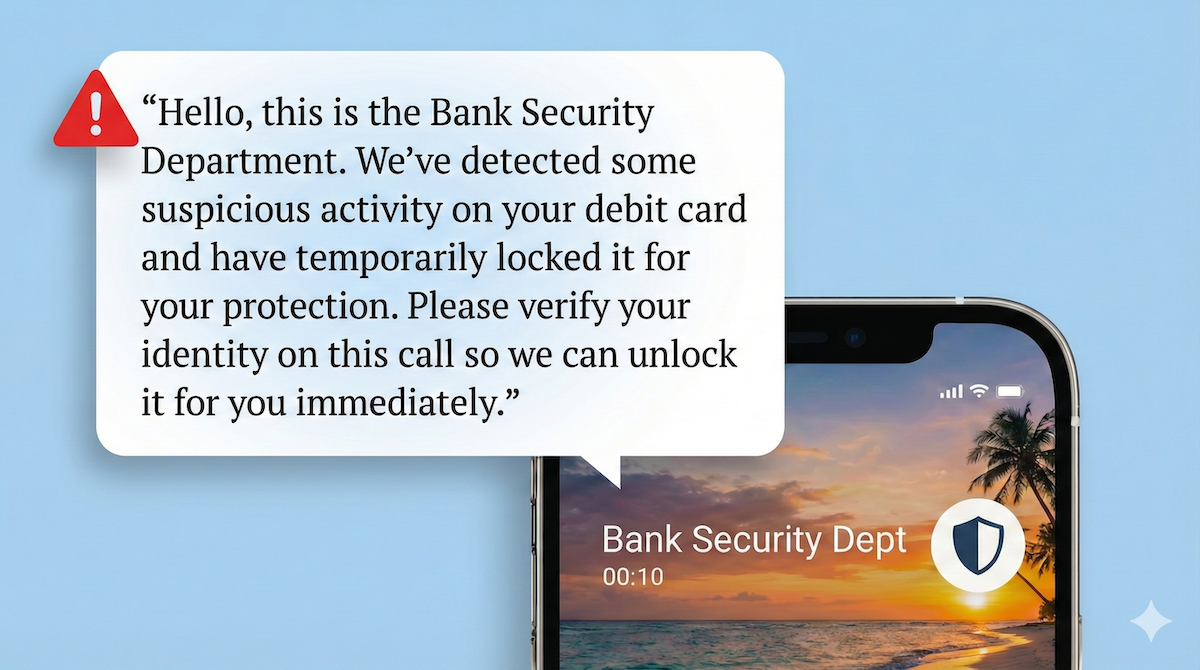
Vishing is most effective when it’s used to move a scam forward after contact is established.
Scammers use vishing to:
- Convince someone to share verification codes or account details
- Pressure victims into making payments or transfers
- Guide people step-by-step through actions that lead to fraud
- Reassure victims when doubts arise
In many cases, vishing follows an earlier message or alert, such as a text, email, or account notification, and serves as the moment where trust is finalized.
How Vishing Calls Typically Unfold
While details vary, many vishing attempts follow a similar structure:
- The call feels routine or official
The caller introduces themselves confidently and may reference an organization or recent activity. - A problem is presented
Fraud, security issues, account problems, or legal concerns are described. - Urgency is introduced
The caller insists action is needed immediately to prevent harm. - A request is made
The caller asks for information, verification codes, payments, or specific actions.
Because the conversation happens live, scammers can adapt their scam script based on how the person responds.
Common Scams That Use Vishing
Vishing is commonly used to execute scams such as:
- Bank and payment fraud, asking victims to “secure” or move money
- Government impersonation scams, threatening fines, arrest, or benefit loss
- Tech support scams, claiming urgent device or account problems
- Verification code scams, requesting one-time passcodes
- Account takeover attempts, once access details are obtained
Why Phone Calls Make These Scams More Effective
Phone calls give scammers advantages that other channels don’t.
Vishing allows scammers to:
- Interrupt independent verification
- Apply emotional pressure in real time
- Adjust their approach based on hesitation
- Sound confident or authoritative
- Keep people engaged until they comply
Unlike emails or texts, phone calls leave less room to pause, reread, or quietly double-check information.
How to Reduce the Risk of Vishing
- Be cautious of unsolicited calls claiming urgency or problems
- Never share passwords, verification codes, or payment details over the phone
- Hang up and contact organizations using official numbers you find yourself
- Let unknown calls go to voicemail—legitimate callers can leave messages
- Take time to pause and think before actin
- Use a trusted free scam checker like Scamwise to review suspicious messages, calls, or emails before responding
If a caller pressures you to act immediately, that’s a signal to slow down.
FAQs
What is vishing?
Vishing is a phone-based scam tactic where callers impersonate trusted organizations or people to pressure victims into sharing information or sending money.
Is vishing a scam itself?
No. Vishing is a tactic used to carry out many different scams, including impersonation, payment fraud, and account takeover.
How is vishing different from phishing or smishing?
Vishing uses phone calls, phishing typically uses email, and smishing uses text messages.
What should I do if I get a suspicious call?
Hang up and verify the request using official contact information before taking any action.
You can't always be there. Savi can.