
Published:
February 18, 2026
•
9
min read
•
By
Patrick Coughlin
%20(1350%20x%20709%20px).png)
The volume of scam and spam calls reaching American phones is higher than it has been in six years. According to the YouMail Robocall Index, January 2026 saw approximately 3.9 billion robocalls placed in the United States, which works out to 125.2 million calls per day and roughly 11.8 robocalls per person for the month.
This represents a sharp acceleration from the already-alarming levels of 2024. The U.S. PIRG Education Fund reported that the monthly average of scam and telemarketing calls rose from 2.14 billion in 2024 to 2.56 billion through September 2025, a 20% year-over-year increase. Truecaller's independent data puts the increase even higher at 33%.
Pew Research Center found that 31% of American adults now receive at least one scam phone call every single day. And the financial toll is staggering. In the first half of 2025 alone, victims who engaged with scam calls lost an average of $3,690. For seniors over 60, the FBI's IC3 reported total call-initiated fraud losses exceeding $4.57 billion in 2024.
The surge is driven by several converging factors. VoIP technology makes it nearly free to place thousands of calls per hour. Auto-dialing systems can cycle through entire area codes in minutes. AI voice synthesis is making robocalls sound more human and harder to distinguish from real callers. And the existing regulatory framework, while improving through STIR/SHAKEN, has not kept pace with the scale of the problem.
The following numbers have been flagged most frequently across consumer complaint databases, carrier analytics, and scam-tracking organizations during 2025 and into early 2026. Keep in mind that scammers cycle through numbers rapidly. A number that was active last month may already be deactivated, and new numbers take its place constantly. This list represents a snapshot, not a permanent blocklist.
(202) 221-7923 has been repeatedly linked to student loan forgiveness scams. Callers claim to represent federal loan servicers and pressure recipients into making immediate payments to "secure" forgiveness before a fabricated deadline. The 202 area code (Washington, D.C.) is deliberately chosen to suggest a government connection.
(347) 437-1689 has appeared in tax scam operations where texts direct recipients to click malicious links, supposedly to resolve an IRS issue or claim a refund. The 347 area code (New York City) adds false credibility.
(301) 307-4601 is associated with USPS delivery scam texts claiming a package could not be delivered and directing recipients to a phishing link to "reschedule" or pay a small fee.
(312) 339-1227 has been tied to both delivery impersonation scams and fake weight-loss product promotions sent via text.
(469) 709-7630 has been reported in failed delivery impersonation campaigns, typically posing as FedEx or UPS and requesting payment to release a held package.
(805) 637-7243 has been linked to Publisher's Clearing House impersonation and fake Visa fraud department calls. Recipients are told they have won a prize but must pay taxes or fees to collect it.
Consumer complaint databases have also flagged these numbers during the 2025-2026 reporting period:
(720) 756-2390 - Auto warranty extension (Robocall)
(763) 274-3899 - Health insurance enrollment (Robocall)
(888) 274-2071 - Credit card interest reduction (Robocall)
(833) 672-1872 - Medicare benefits scam (Robocall)
(855) 408-2065 - Tech support impersonation (Robocall)
(206) 866-4979 - Amazon order verification (SMS + call)
(305) 967-4025 - Social Security suspension (Robocall)
(628) 258-0667 - Google account security alert (SMS)
(571) 303-1090 - IRS impersonation (Robocall)
(704) 631-2770 - Utility payment scam (SMS + call)
This list changes frequently. For real-time checking of any number, paste it into Scamwise or search it on the BBB Scam Tracker.
Beyond specific numbers, certain area codes appear disproportionately in scam call reports. Understanding these patterns helps you evaluate incoming calls more quickly.
The North American Numbering Plan assigns standard-looking area codes to Caribbean nations. Scammers exploit this because calls to these numbers look domestic but can incur international per-minute charges. If you call back, you may be connected to a premium-rate line.
The most commonly exploited are 876 (Jamaica - lottery and prize scams), 809, 829, 849 (Dominican Republic - romance and callback scams), 284 (British Virgin Islands - one-ring premium rate), 649 (Turks and Caicos - one-ring premium rate), 767 (Dominica - lottery impersonation), 268 (Antigua and Barbuda - callback scams), and 473 (Grenada - prize notification scams).
Scammers do not operate from these area codes; they spoof them because they are associated with government agencies or major institutions.
202 (Washington, D.C.) is spoofed in government impersonation scams. Callers claim to represent the IRS, Social Security Administration, Department of Justice, or other federal agencies.
212 and 646 (New York City) are spoofed in financial scams because of the association with Wall Street and major banks.
415 and 650 (San Francisco Bay Area) are spoofed in tech support scams, leveraging the connection to Silicon Valley companies.
The single most common spoofing technique is neighbor spoofing, where the scam call displays a number with your own area code and sometimes your own three-digit prefix. Research indicates that roughly 68% of scam calls now use this technique because people are far more likely to answer a call that appears local.
According to U.S. PIRG research and carrier analytics, these are the most prevalent scam call categories.
Callers offer pre-approved personal loans, student loan forgiveness, or debt consolidation at unrealistically favorable terms. They request upfront "processing fees" or personal financial information to "finalize" the offer.
Robocalls or live callers announce that you have won a prize, often impersonating Publisher's Clearing House or major retailers. To claim the prize, you are told to pay taxes, shipping fees, or processing charges via gift card, wire transfer, or cryptocurrency.
Callers offer special enrollment periods, reduced premiums, or new benefits that do not actually exist. They collect personal information including Social Security numbers and Medicare IDs.
Despite years of FTC enforcement actions, extended auto warranty robocalls remain one of the most common scam call types. The pitch claims your vehicle warranty is expiring and offers coverage that is either nonexistent or drastically overpriced.
Callers pose as representatives of the IRS, Social Security Administration, U.S. Marshals, or local courts. They claim you owe money, your Social Security number has been compromised, or there is a warrant for your arrest. Payment is demanded immediately, usually via gift cards or wire transfer.
Callers claim to represent Microsoft, Apple, or your internet service provider. They report a virus or security breach on your device and request remote access to "fix" the problem, which gives them access to your files and financial accounts.
Understanding how scammers target your number helps explain why blocking alone is not enough.
Auto-dialers and predictive dialers cycle through every possible phone number within an area code. Your number does not need to have been "leaked" for a robocaller to reach you. They dial millions of numbers and track which ones ring, which go to voicemail, and which are answered by a live person.
Data breaches have exposed billions of phone numbers. When a company that has your number suffers a breach, your number enters circulation among fraud networks. Major breaches at telecom companies, healthcare providers, and retail chains have contributed millions of numbers to these lists.
People-search sites aggregate public records and make phone numbers easily searchable. While these sites serve legitimate purposes, they also serve as a free database for scammers.
Social media and online activity can expose your number if it is included in your profile, listed on a business page, or submitted to any online form that was subsequently breached.
Every major U.S. carrier offers a free scam-filtering tier that handles bulk robocall noise effectively.
T-Mobile Scam Shield automatically identifies and labels scam calls. The free tier provides scam ID and basic blocking.
Verizon Call Filter labels suspected spam calls and lets you report numbers. The free version provides caller ID for unknown numbers.
AT&T Call Protect automatically blocks fraud calls and warns about suspected spam.
These carrier tools catch the most obvious automated campaigns and prevent the highest-volume scam operations from reaching you. They are a good baseline and worth enabling.
Beyond carrier tools, several categories of third-party apps provide additional coverage. These apps typically use community-sourced databases, machine learning, or audio fingerprinting to catch calls that carrier filters miss. Some focus on caller identification, others on aggressive blocking, and others on voicemail screening. Most offer a free tier with basic features and a paid tier with broader protection. When evaluating any blocking app, look for how frequently its database updates, whether it catches spoofed numbers, and whether it screens calls contextually or only by number reputation.
Carrier tools and third-party blocking apps excel at catching bulk robocall campaigns - the kind of mass-dialed operations that hit millions of numbers with the same recorded message. When a number has been reported thousands of times, the systems flag it quickly.
But targeted scam calls are a different problem. When a scammer spoofs a specific number, calls from a newly activated line, or uses social engineering tailored to a specific victim, number-based blocking often misses it. The call arrives without a spam label, the number looks legitimate, and generic blocking tools have no basis to flag it.
This is where layered, context-aware protection becomes important. Carrier tools form a useful first line of defense against high-volume noise. But for the calls that slip through, screening that evaluates the context of a call - not just the reputation of a number - provides meaningful extra protection. Savi Premium, launching in 2026, is built around this approach: analyzing call context, caller behavior, and known scam patterns in real time rather than relying solely on number databases. Visit savisecurity.com to join the waitlist.
If you have already received a call or text from a number you are not sure about, you can check it instantly with Scamwise. Scamwise is Savi's free scam checker - paste the message, describe the call, or enter the phone number, and Scamwise will tell you whether it matches known scam patterns before you respond.
Check any suspicious number instantly
Check a Number Free
Patrick Coughlin
Patrick Coughlin is a cybersecurity and technology expert with over two decades of hands-on experience at the intersection of technology, intelligence, and security. He has built teams, products and companies to protect governments and Fortune 500 enterprises from the most sophisticated cyber threats. When his mother was targeted with an AI-powered impersonation scam, the threat became personal. Soon after, Patrick, along with his brother Ryan, founded Savi Security to help protect individuals and families from scams and fraud in the AI era. Patrick lives in Los Angeles with his wife, son and dog.
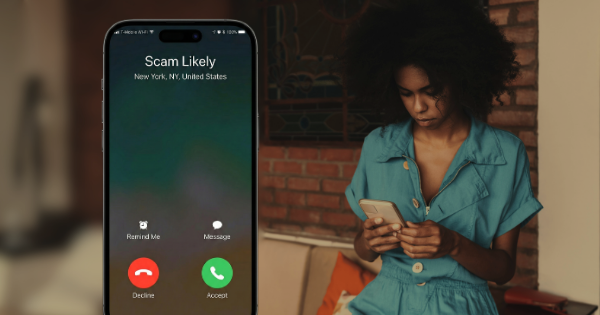
Learn how scam calls work, why caller ID spoofing makes them convincing, how scammers use AI and voice cloning, and steps to protect yourself from phone fraud.
4 min read
.png)
Stop the flood of scam calls without missing important calls. Learn how to use built-in phone features, carrier protections, and the Do Not Call Registry to drastically reduce robocalls and phone scams.
4 min read
.png)
Reporting a scam is one of the most important steps you can take — whether or not you lost money. This guide covers exactly where to file based on scam type: FTC, FBI IC3, FCC, SEC, CFTC, and platform-specific reporting for Zelle, PayPal, Amazon, and more.
4 min read
Upload any suspicious message for a free, instant scam check.
Try Scamwise — it's free